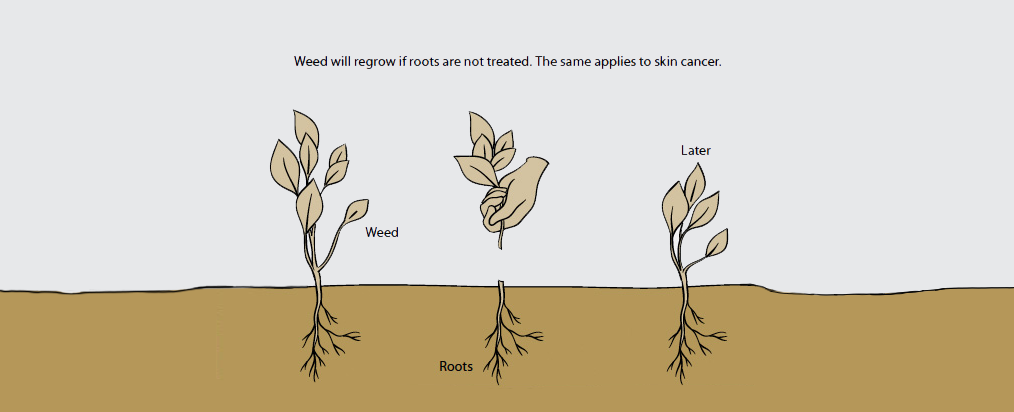
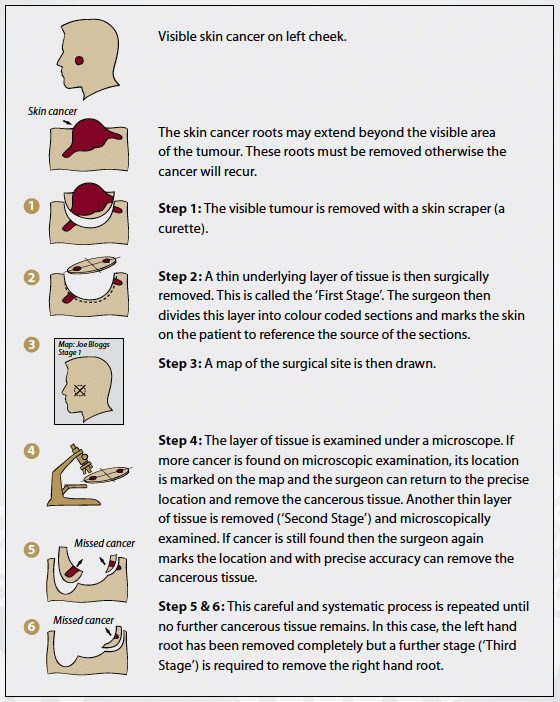
Mohs micrographic surgery involves surgical excision of cancer containing tissue and systematic microscopic examination of all cut surfaces at the time of the operation. It is a highly specialised procedure for the total removal of skin cancers. If the tests show that there is any cancer remaining, then further surgery is performed at the sites where cancer could be. The tissue is tested again and the procedure is repeated until there is the confidence that the whole tumour has been removed. The steps involved are shown in the diagram below.
What kind of anaesthetic is required?
Mohs micrographic surgery is performed under local anaesthetic. This means the patient is awake during the whole procedure.
How long does it take?
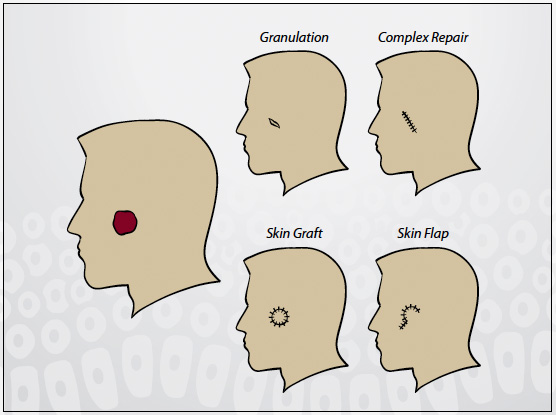
Complete removal of a skin cancer, which may involve several surgical stages, is usually completed in half a day. After the surgery, a decision is made as to the best way to manage the wound created by the surgery.
How effective is Mohs micrographic surgery?
Using the Mohs micrographic surgical technique, the cure rate for skin cancer is very high, often 95% to 98% – even if other forms of treatment have failed. This is the highest cure rate among all treatments available for treating the common skin cancers.