
Thread Vein Removal in Birmingham
Reduce visible thread veins on the face or body for clearer, more even looking skin
Vascular laser and Broad Band Light (BBL) treatment selected according to your vessels, skin and treatment area.

Quick Facts about Thread Vein Treatment

Best for
Face, nose, neck & chest thread veins
Treatment
Excel V+ & BBL
Anaesthetic
Usually not required

Sessions
Usually 5–7

Typical reduction
Approx. 50–70%

Price
See below
Thread vein treatment at Midland Skin
Visible thread veins can occur anywhere on the face or body. They may appear as individual red, purple or blue vessels, branching vessels or a wider network of visible redness.
Thread veins can remain noticeable even when the surrounding skin is otherwise clear. They may be difficult to conceal and can become more prominent with time.
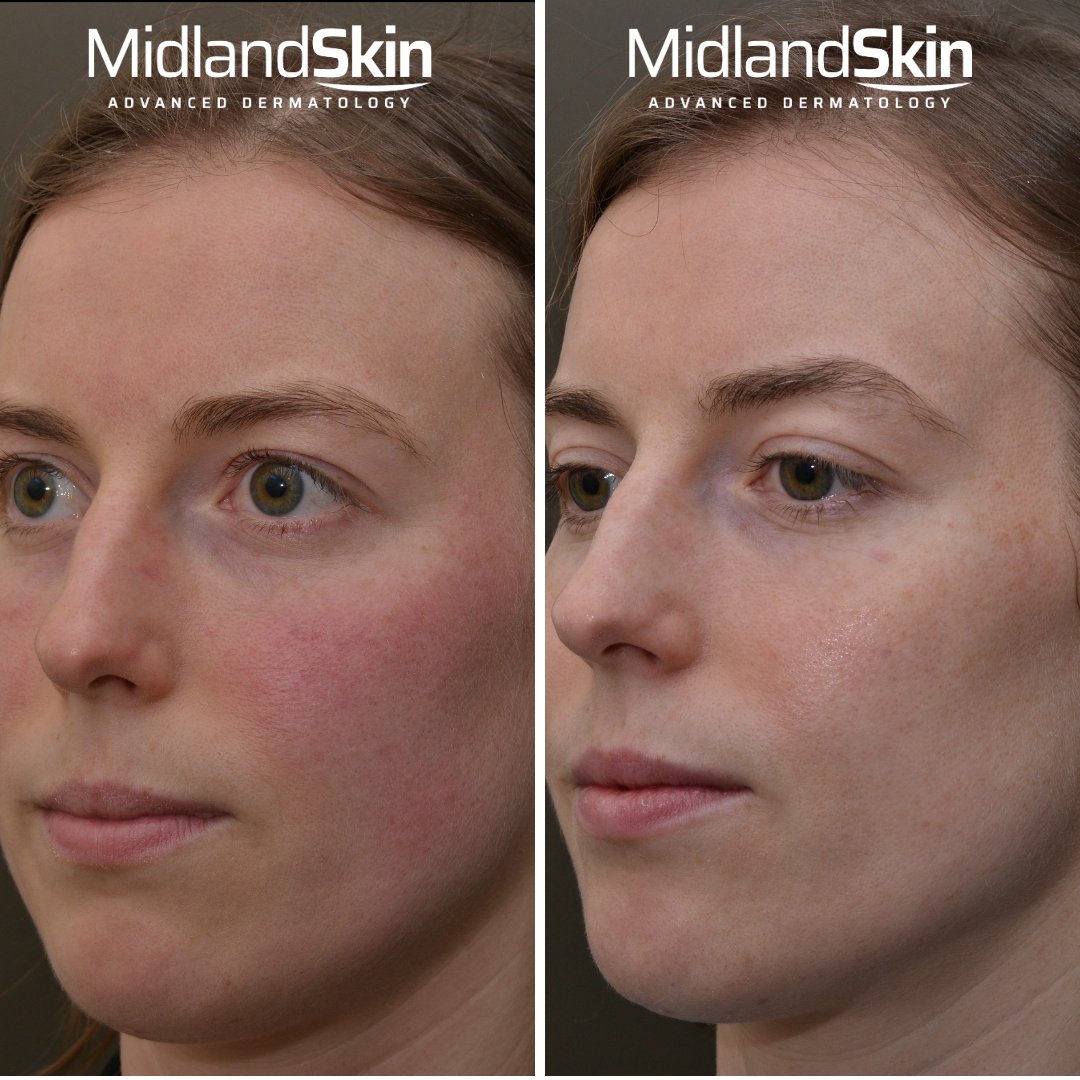
Vascular laser and Broad Band Light (BBL) can reduce these vessels, making them less conspicuous and helping the treated area appear clearer and more even.

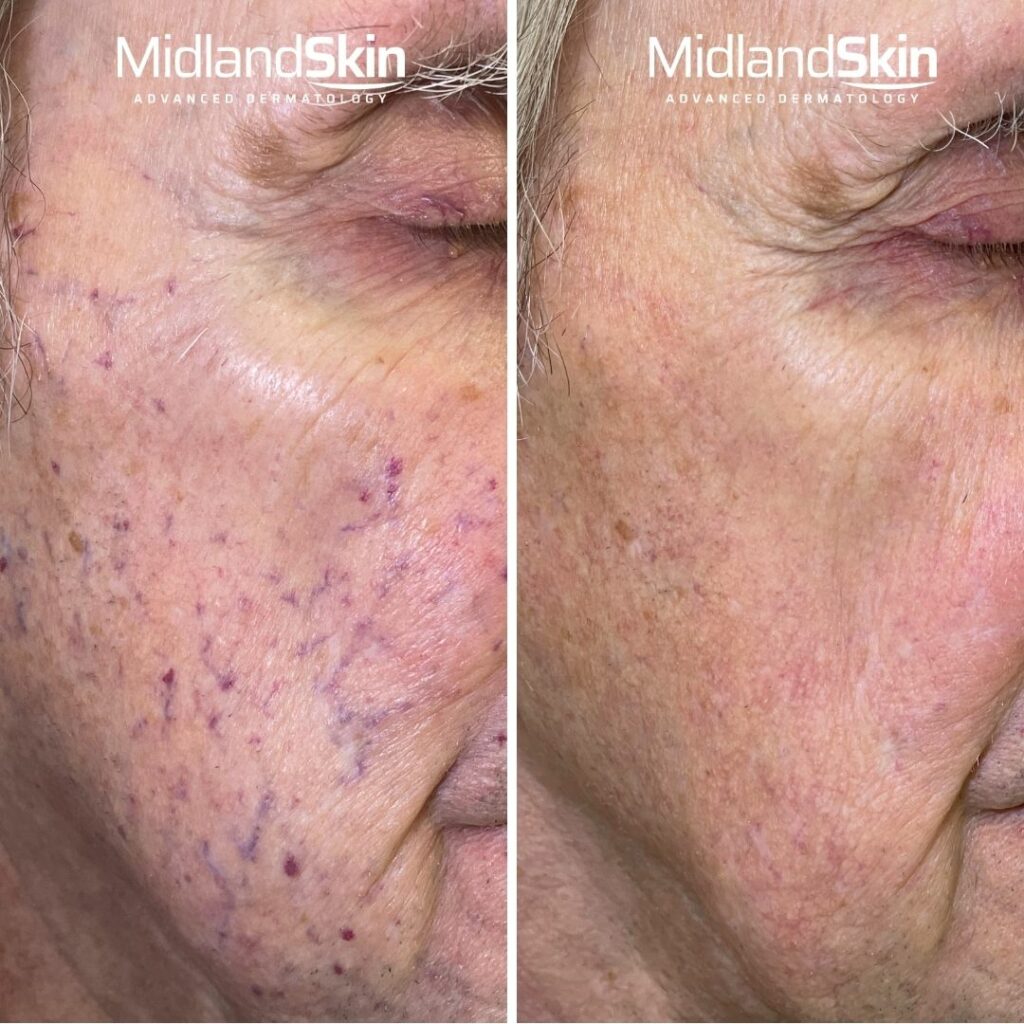
Before and after thread vein laser treatment


Thread vein laser treatment videos
3 Things You Might Not Know About: Thread Veins
Thread Veins Laser Transformation
Thread veins transformation

mathew

Who is thread vein treatment suitable for?
Specialist assessment may be worthwhile if:
- you have visible red, purple or blue vessels on the face or body
- the vessels form distinct lines, branches or a visible network
- you have a wider area of redness containing multiple fine vessels
- the vessels have become more noticeable or returned after previous treatment
- visible vessels are affecting your confidence
- you have rosacea or other conditions leading to redness and thread veins
- you understand that several treatments and future maintenance may be required
- you are seeking a worthwhile reduction rather than guaranteed complete clearance
Treatment may need to be postponed if the skin is tanned, recently sun-exposed, inflamed or infected. Suitability also depends on your medical history, medications, skin tone, treatment area and the risk of pigment change or scarring.
Thread veins and rosacea
Thread veins, also called broken capillaries or telangiectasia, usually appear as individual lines, branches or networks of visible blood vessels.
Thread veins can occur with or without rosacea. If facial vessels occur alongside persistent background redness, flushing, spots, post-inflammatory redness, burning or sensitive skin, rosacea may be an important part of the problem.
When thread veins are associated with rosacea, treatment is modified to obtain the best overall outcome. Rather than targeting the visible vessels alone, the treatment plan may also address background redness, post-inflammatory redness and flushing. Laser and BBL may be combined with medical treatment where necessary.
You can read more about this wider approach on our Rosacea, Redness and Flushing page.
Book in with us
Ready to get started? Book a consultation with our team at Midland Skin. Friendly, expert advice tailored to you.
Thread veins and broken capillaries on the nose
Thread veins often appear on the nose and around the mouth, as well as elsewhere on the face. They usually show as fine red lines or small branching vessels across the sides of the nose.
Both the Excel V+ vascular laser and Sciton BBL can treat thread veins on the nose. The clinician chooses the device and settings at your assessment, depending on the vessels, your skin tone and the treatment area.
Vessels around the nose are more likely to return than those elsewhere, so maintenance treatment may be needed once a year or sometimes sooner. If the veins are part of rosacea, the treatment plan also addresses the background redness and flushing.
Why having more than one vascular platform matters
Both the Excel V+ vascular laser and Sciton BBL can treat individual vessels, networks of thread veins and broader vascular redness associated with underlying conditions such as rosacea. The advantage of having both platforms is not that each is restricted to a particular type of vessel: it is that they deliver light differently and provide a wider range of wavelengths, filters and treatment settings.
This allows the clinician to select the technology best suited to your vessels, their depth and colour, the treatment area, your skin tone and your response to previous treatment.
A treatment course may use one platform throughout or more than one platform where clinically appropriate. Neither Excel V+ nor BBL is automatically the better option. The recommendation is made after assessing the individual patient.
Visible improvement with realistic expectations
At Midland Skin, we advise patients to plan for a course of five to seven treatments to achieve an overall reduction of approximately 50–70% in visible thread veins.
This is a practical guide based on our clinical experience, not a guaranteed outcome. It describes the overall reduction across the treated area; it does not mean that every individual vessel will disappear.
Some vessels may clear, some may become less noticeable and others may remain unchanged. Results vary according to the size, depth and location of the vessels, your skin tone and the underlying reason they have developed.
Patients with darker skin tones can still be assessed for treatment, but response rates are generally lower. Melanin within the skin also absorbs some of the light used by vascular devices, so safer treatment may require more conservative settings. This can mean a slower or less complete response, more sessions or, for some combinations of skin tone and vessel type, that treatment is not recommended.
Not everyone responds to treatment. A small number of patients obtain little or no worthwhile improvement, even after appropriately selected treatment.
If your vessels are not responding as expected, your clinician will review the clinical photographs and discuss whether changing the platform, modifying the treatment plan or stopping treatment would be more appropriate.
Can thread veins return?
Yes. Some treated vessels can reopen or become visible again, and new vessels may develop nearby. Recurrence is particularly common around the nose.
Maintenance treatment may be required once a year or sometimes sooner, depending on how quickly vessels return and whether they remain bothersome.
Vessels associated with rosacea are generally more prone to recurrence than isolated vessels associated with ageing or sun damage. This is because rosacea is an ongoing inflammatory and vascular disorder that can continue to cause existing vessels to become more visible and new vessels to develop.
Thread Vein Treatment Pathway
Initial laser treatment consultation
Your clinician assesses the vessels, treatment area, skin and medical history and discusses what you would like treatment to achieve.
Suitability and care plan
The clinician selects the most appropriate vascular platform and explains the likely treatment course, expected response, recovery, risks and fees.
Course of treatment
Treatment begins at a separate appointment after the required two-week cooling-off period and any necessary test patch or preparation.
Response and maintenance
Your response is assessed using clinical photographs before further treatment, maintenance or stopping treatment is recommended.
What happens during treatment?
Clinical photographs are taken and the treatment plan and consent are confirmed. The treatment area is prepared and appropriate eye protection is used throughout treatment.
The selected device delivers brief pulses of light to the vessels. Treatment commonly feels like a short pinch, snap or burst of heat. Cooling may be used to improve comfort, and local anaesthetic is not usually required.
The appointment length depends on the treatment area and number of vessels.
Redness usually lasts for one to two days. Swelling can last for one to four days. Depending on the vessels and settings used, bruising, purple discolouration or fine crusting may remain visible for longer.
Risks and limitations
Temporary redness, warmth and swelling are expected after many vascular laser and BBL treatments. Depending on the vessels and settings used, there may also be bruising or purple discolouration.
Less common risks include blistering, prolonged redness and swelling, lighter or darker pigmentation, textural change, rosacea flares and scarring.
The risk of pigment change is greater in recently tanned skin and can also be greater in darker skin tones because melanin absorbs some of the treatment energy. You must therefore be tan free for a treatment.
Treatment may not completely clear every vessel, and the final cosmetic result cannot be guaranteed.
Thread vein treatment FAQs
Can treatment take place at my first appointment?
Your initial appointment is used to assess the vessels and plan treatment. Vascular laser or BBL treatment is arranged separately.
What should I do before treatment?
Avoid tanning and fake tan on the treatment area and attend for your appointment makeup free.
Will the treatment hurt?
Most people describe a brief pinching, snapping or hot sensation. The feeling stops quickly after each pulse, and cooling may be used where appropriate. Local anaesthetic is not normally required.
What will I look like afterwards?
Redness generally lasts for one to two days, while swelling can last for one to four days. Bruising lasts 7 to 10 days.
Can I drive and return to work?
Most patients can drive and return to light or desk-based work. However, redness, swelling or bruising may remain visible, so the practical downtime depends on the treatment area and how you respond.
What aftercare will I need?
Use gentle skincare, follow the sun-protection advice provided and avoid strenuous exercise, hot baths, saunas and other sources of heat for 48 hours after treatment. You can apply makeup straight away, and return to your normal skin care as soon as any redness and swelling have settled.
Jenny styler
Why choose Midland Skin for thread vein treatment?
Thread veins vary considerably, and successful treatment depends on selecting the technology and settings best suited to the individual patient.
- Assessment takes place within a specialist dermatology clinic.
- We consider whether the concern is a thread vein, spider naevus, rosacea or another skin problem.
- Both Excel V+ vascular laser and Sciton BBL are available.
- Treatment is selected according to the vessels, treatment area, skin tone and pattern of redness.
- Treatment of rosacea-associated vessels can be modified to target background redness, post-inflammatory redness and flushing, with medical treatment added where necessary.
- The platform or treatment plan can be adjusted to optimise results.
Fees for laser thread vein removal
Laser for thread veins Show pricing
Book ConsultationInitial laser assessment with a consultant
Up to 25 minutes
Laser redness / thread vein reduction – Small area
Laser redness / thread vein reduction – Intermediate area
Laser redness / thread vein reduction – Full face
References used for this article
- Gao L, et al. A retrospective analysis for facial telangiectasia treatment using pulsed dye laser and intense pulsed light configured with different wavelength bands. Journal of Cosmetic Dermatology. 2020.
- Yepuri V, et al. Light-based devices for the treatment of facial erythema and telangiectasia. Dermatologic Surgery. 2021.
- Cai Y, et al. Efficacy and safety of intense pulsed light for the treatment of facial erythema: a systematic review and meta-analysis. 2023.
About the Author
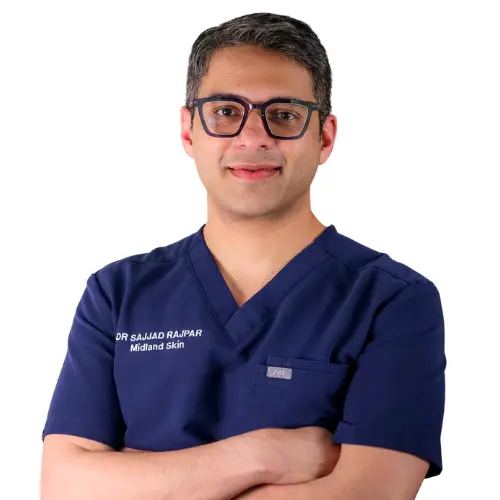
This page has been written and/or medically reviewed by Dr Sajjad Rajpar, Consultant Dermatologist and Medical Director of Midland Skin, Birmingham.
Dr Rajpar is on the GMC Specialist Register in Dermatology and has over 20 years’ experience in clinical dermatology. He provides clinical oversight to ensure the information on this page is accurate, balanced and consistent with current dermatology practice.
Dr Sajjad Rajpar
Date last updated: 30th Sep 2026
Book in with us
Expert, consultant led care in dermatology, skin surgery, eyelid surgery, lasers and aesthetics.
Disclaimer
The content on this website is provided for general information only. It is not, and must not be treated as, medical advice, a diagnosis, or a recommendation for any particular treatment. We make reasonable efforts to keep information accurate and up to date, but medicine and technology change, and content may not reflect the most current evidence, guidance, product information, or individual practice. You should not rely on this website to make decisions about your health or treatment. Always seek personalised advice from an appropriately qualified healthcare professional. Any examples, images, testimonials, and outcome descriptions are illustrative only. Results vary between individuals and no outcome can be guaranteed.

