
Halo laser treatment in Birmingham
Hybrid fractional laser resurfacing for skin tone, texture, pigmentation, fine lines and selected acne scars
Midland Skin offers Sciton Halo laser treatment for patients from Birmingham, Solihull, Coventry, Wolverhampton, Worcester and across the Midlands.
Halo combines two fractional laser wavelengths in one treatment. The intensity can be adjusted according to your skin, concerns and preferred recovery time. A consultation with a Consultant Dermatologist is required to determine whether Halo—or another form of laser resurfacing—is the most appropriate option.


Quick Facts about Halo laser

Best for
Tone, texture & pigmentation

Treatment
Hybrid fractional laser
Anaesthetic
Topical and/or local

Recovery
Usually 7 days

Sessions
Commonly 2 for the face

Price
See below
What is Halo laser treatment?
Halo is a hybrid fractional laser treatment designed to improve several aspects of skin quality within the same session.
It may improve fine lines and wrinkles, selected acne scars, sun damage, unwanted pigmentation, enlarged pores, uneven or dull skin tone, skin texture and mild tissue laxity.
Treatment can produce brighter, smoother and more even-looking skin. The settings can be adjusted from a lighter treatment with less recovery to a deeper treatment intended to produce a greater improvement.

Who is Halo laser treatment suitable for?
A Halo laser consultation may be worthwhile if:
- you have uneven skin tone, sun damage or unwanted pigmentation
- you would like to improve fine lines or early signs of skin ageing
- your skin feels rough, dull or uneven
- enlarged pores are a significant concern
- you have selected acne scars or other surface irregularities
- you would like greater improvement than a superficial skin treatment may provide
- you want to explore resurfacing without the recovery associated with fully ablative laser treatment
- you are prepared for several days of redness, bronzing and flaking
Halo can be used across all skin types and on the face, neck, chest, arms and legs. The risk of post-inflammatory hyperpigmentation is greater in darker skin types, and settings must be selected carefully. Body areas also heal more slowly than the face, so treatment is usually less intensive and more sessions may be needed.
Not everyone will be suitable. Your dermatologist will consider your skin type, medical history, medication, previous treatments, tendency to develop pigmentation and what you are hoping to achieve.
Active acne may need to be controlled before treatment, and Halo can aggravate melasma in some patients. Halo should not be performed within six months of taking isotretinoin.
Patients with very deep lines, severe sun damage, significant skin laxity or deeper scars may be advised that ProFractional, full-field erbium laser, fully ablative CO₂ laser or another treatment is more appropriate.
How does Halo laser work?
Halo is the first hybrid fractional laser to deliver an ablative and a non-ablative wavelength into the same microscopic treatment zone.
1470 nm non-ablative laser: delivers controlled columns of heat into the dermis, stimulating collagen and tissue renewal. It can target deeper pigmentation and coagulate small blood vessels contributing to redness. The treatment depth can be adjusted down to 700 microns, which may reach the base of many acne scars.
2940 nm ablative laser: resurfaces the epidermis and removes superficial sun damage and pigmentation. It can be adjusted to a depth of up to 100 microns.
The two wavelengths fire consecutively into the same microscopic treatment columns, allowing surface resurfacing and deeper dermal treatment to take place together.
“Fractional” means that the laser treats microscopic columns of skin while leaving surrounding areas untreated. These untreated areas help the skin heal more quickly than it would after fully ablative resurfacing.

What happens within the skin?
Following treatment, unwanted pigment forms tiny areas of microscopic epidermal necrotic debris, known as MENDs. These appear as bronzing or small dark dots before naturally shedding over approximately seven days.
The 2940 nm wavelength also reduces abnormal sun-damaged cell types that may otherwise contribute to the development of future skin lesions. Halo should not, however, be considered a substitute for sun protection or appropriate skin surveillance.
The treatment stimulates new collagen and tissue renewal. This is why improvements in skin texture, thickness, lines and tightening continue to develop after the surface has healed.

What results can I realistically expect?
Initial improvement becomes visible as the bronzing and flaking settle, usually within the first five to seven days. Skin texture, pigmentation and overall brightness may continue to improve over the following weeks.
Collagen remodelling develops more gradually. Improvements in skin thickness, lines and tightening may continue for up to six months.
Halo can produce a worthwhile improvement, but the response varies between patients. It will not remove every line, scar, pore or area of pigmentation, and a particular cosmetic outcome cannot be guaranteed.
In a 2018 multicentre study of 29 women who received two treatments six weeks apart, independent photographic assessment found significant improvement in 80% of participants. All participants reported being satisfied with treatment. Two developed post-inflammatory hyperpigmentation, which settled within 90 days. This was a small, selected study, so its findings should not be interpreted as a guarantee of an individual result.
A further study published in 2022 also reported high levels of patient satisfaction following hybrid fractional laser treatment.

How many Halo treatments will I need?
The number and intensity of treatments will be agreed during your consultation.
For the face, a common treatment plan is two deeper treatments approximately eight weeks apart, followed by one maintenance treatment around every 12 months.
For the neck or body, treatment is normally milder because these areas heal more slowly than the face. A typical plan may involve two to four treatments approximately 12 weeks apart.
A lighter treatment can provide a shorter recovery period, but more sessions are usually needed. For example, four or five lighter treatments may be required to produce a similar overall effect to two deeper treatments.
How long do the results last?
The improvements produced by collagen remodelling can be long-lasting, but Halo does not stop skin ageing or prevent new sun damage.
Some patients choose to maintain their results with treatment approximately once a year. Daily sun protection and avoiding unnecessary UV exposure will help preserve the improvement.

How does Halo compare with other laser treatments?
Halo or ProFractional laser
ProFractional is an ablative fractional laser that can penetrate more deeply—up to approximately 1,500 microns. It may be more appropriate when the main concern lies deeper in the dermis, including certain acne scars and surgical scars. Because ProFractional can be a deeper treatment, recovery may be several days longer than after Halo.
Halo or fully ablative laser resurfacing
Fully ablative erbium or CO₂ laser treatment removes the full surface of the treated skin. It may produce a greater improvement from one treatment, particularly for deeper lines or severe sun damage, but involves more significant downtime and risks. Not everyone is suitable for fully ablative resurfacing. The balance between likely improvement and acceptable recovery will be discussed during your consultation.
Halo or Fraxel
Halo differs from non-ablative Fraxel treatments because it delivers ablative and non-ablative wavelengths through the same treatment head. This allows surface resurfacing and deeper dermal treatment to take place together.
The number of sessions, discomfort, recovery and likely improvement depend on the device, settings and condition being treated. Halo should not be assumed to be the best option for every patient.
Book in with us
Ready to get started? Book a consultation with our team at Midland Skin. Friendly, expert advice tailored to you.
Treatment pathway for Halo laser
Initial laser assessment
A Consultant Dermatologist assesses your skin, medical history, previous treatments and what you are hoping to improve.
Suitability & Treatment Plan
Your dermatologist decides whether Halo is appropriate and discusses the settings, sessions, alternatives, risks, recovery and likely limitations.
Treatment & Monitoring
Treatment usually takes 40–60 minutes. Your progress may be monitored using photographs, with a review arranged where clinically appropriate.
Combining Halo with other treatments
Your dermatologist may recommend combining Halo with another treatment when this is likely to address different aspects of your skin more effectively.
- Halo with BBL broadband light: frequently used when pigmentation, redness and wider skin rejuvenation need to be addressed together. In our experience, these treatments can work particularly well together.
- Halo with Micropeel: removes approximately 6–10 microns of surface skin immediately after Halo for additional exfoliation.
- Halo with focal fully ablative laser: deeper resurfacing may be used around the eyes or mouth, with Halo treating the remaining areas.
Combination treatment is not automatically suitable. The recommendation will depend on your skin, concerns, acceptable recovery and risk of complications.


Recovery, risks and limitations
A typical Halo treatment involves approximately five to seven days of visible recovery. The skin is initially warm, red and swollen before becoming dry, bronzed and flaky. A lighter treatment may involve around one day of downtime, but more sessions will usually be required.
Redness often settles over the first day or two but may remain visible for up to a week after lighter treatment. Following heavier treatment, prolonged redness can occasionally last for several weeks or, rarely, three to six months.
Swelling usually improves over three to four days and can be most noticeable around the eyelids. Allow bronzed or flaky skin to shed naturally and do not pick it, as this can increase the risk of scarring.
Possible side effects
Infection, allergic reactions and lightening of the treated skin are uncommon. Other potential side effects and limitations include:
- Infection. Antibiotics may be prescribed before heavier treatment where appropriate.
- Recurrence of facial cold sores. Preventative antiviral medication is usually started on the day of treatment when prescribed.
- Acne breakouts or a flare. Active acne is preferably brought under control first. Some patients may require acne medication for several weeks after treatment.
- Prolonged redness. This is more likely following heavier treatment.
- Post-inflammatory hyperpigmentation. This often improves over approximately three months but may require prescription treatment. The risk is greater in darker skin types.
- Aggravation of melasma.
- Scarring. This is uncommon but may occur, particularly if healing skin is picked or irritated.
- Insufficient improvement. Individual responses vary and a particular outcome cannot be guaranteed.
Superficial pigmentation commonly becomes darker before it flakes away. This expected bronzing should not be confused with post-inflammatory hyperpigmentation.
On the day: Halo laser treatment FAQs
Who will perform my Halo laser treatment?
Your assessment and treatment plan will be led by a Consultant Dermatologist experienced in laser resurfacing. The treatment settings will be selected for your skin, treatment area, concerns and acceptable recovery time.
What should I tell my dermatologist before treatment?
Tell us if you have previously experienced facial cold sores or have used isotretinoin. You should not undergo Halo treatment within six months of taking isotretinoin. You should also disclose any medication, medical conditions or previous problems following laser treatment.
What anaesthetic is used?
Topical anaesthetic cream is usually applied approximately 45 minutes before facial treatment. Local anaesthetic injections may also be used to reduce discomfort. Some areas, including parts of the neck, décolletage or body, may not require topical anaesthetic. Your dermatologist will explain what is appropriate for your treatment.
Will Halo laser hurt?
You may feel bursts of heat, pinpricks or a sensation similar to sunburn. Anaesthetic and the treatment settings are adjusted to make the procedure as comfortable as reasonably possible.
How long does treatment take?
The laser treatment usually takes between 20 and 40 minutes, depending on the size and number of areas being treated. You should allow additional time for preparation and anaesthetic.
What eye protection is used?
You will be given specialist protective eyewear because laser light can damage the eyes. This must remain in place throughout treatment.
Can I drive home?
Your dermatologist will advise you based on the treatment area and intensity. Following deeper facial treatment, particularly close to the eyes, it is sensible to arrange for someone to collect you.
After Halo treatment: recovery and aftercare FAQs
How will I look immediately after treatment?
The skin will be red, swollen and warm. The heat usually settles within a few hours, although warmth and redness may continue for a day or two. Cold compresses or thermal water spray can provide comfort. There may occasionally be pinpoint bleeding during the first day. As the microscopic treatment columns heal, the skin becomes dry and may feel like sandpaper. Bronzing, small dark dots and flaking then develop. Allow the skin to shed naturally and do not pick it.
How much downtime should I allow?
A typical Halo treatment involves approximately five to seven days of visible recovery. A lighter treatment may produce minimal redness and flaking with around one day of downtime, but four or five lighter sessions may be needed to produce an effect comparable with two deeper treatments. Recovery varies according to the treatment intensity, area treated and individual healing response.
What aftercare products will I need?
The usual aftercare products are:
- Dermol 500 to wash the skin twice daily for seven days
- Aquaphor ointment as a barrier for the first three days
- CeraVe or Cetaphil lotion from day four onwards
Your dermatologist may also prescribe oral antiviral medication, steroids or, for heavier treatments, antibiotics. Wash gently and allow the skin to air dry or pat it with a clean towel or kitchen roll. Do not rub. Apply the recommended barrier product and top it up at least twice during the day. Wash gently and reapply it again in the evening. Continue this routine for the first five days, applying the barrier product more thinly as the redness settles. Take all prescribed medication as directed, including a second antiviral dose where this has been advised.
When can I restart skincare and wear make-up?
Do not use your everyday skincare products for at least five days because the skin barrier is temporarily impaired. Light mineral make-up can usually be worn between three and five days after treatment, once redness has settled and there is little peeling.
When can I exercise?
Avoid strenuous exercise, sweating and other activities that may irritate the skin for one week, or until the skin has fully healed.
How should I protect my skin afterwards?
Avoid direct sun exposure for at least two months. Use a broad-spectrum sunscreen providing UVA and UVB protection with an SPF of at least 30 for a minimum of three months, and reapply it every two hours when exposed to sunlight. Until the skin has healed sufficiently for sunscreen, stay out of direct sunlight and wear a wide-brimmed hat.
How will my recovery be monitored?
Your progress may be monitored using the “selfie” photographs you send to the clinic. Follow any additional aftercare advice provided by your dermatologist and contact the clinic if you are concerned about healing.
Why choose Midland Skin for Halo laser?
Each treatment is planned by a Consultant Dermatologist and tailored to the individual patient. Halo allows the energy, depth and density of both wavelengths to be fine-tuned according to your skin, concerns and acceptable recovery.
Midland Skin also offers several alternative resurfacing treatments. If Halo is not the most appropriate option, your dermatologist can discuss whether ProFractional, full-field erbium, fully ablative CO₂ laser or a combined treatment would be more suitable.
How does Halo support consistent treatment delivery?
Halo uses Dynamic Thermal Optimisation to measure skin temperature during treatment. Its surface-area mapping and built-in speed sensor help the clinician deliver the planned amount of energy evenly across the treatment area. These safety features work alongside an individualised treatment plan; they do not remove the possibility of side effects.
Book in with us
Ready to get started? Book a consultation with our team at Midland Skin. Friendly, expert advice tailored to you.
Fees for Halo laser & Halo BBL
Halo laser Show pricing
Book ConsultationInitial laser assessment with a consultant
Up to 25 minutes
Halo laser – face
Halo laser and BBL – face
References used for this article
- Waibel S et al. Hybrid Fractional Laser: A Multi-Center Trial on the Safety and Efficacy for Photorejuvenation. J Drugs Dermatol. 2018 Nov 1;17(11):1164–1168.
- Fusano M, Bencini PL, Galimberti MG. Hybrid fractional laser treatment for photodamaged facial skin rejuvenation 6 years following fractional CO₂: comparison of clinical outcome and patients’ satisfaction. Lasers Surg Med. 2022;54(8):1045–1050. doi:10.1002/lsm.23583.
- Benson TA, Hibler BP, Kotliar D, Avram M. Nonablative fractional laser treatment is associated with a decreased risk of subsequent facial keratinocyte carcinoma development. Dermatol Surg.
About the Author
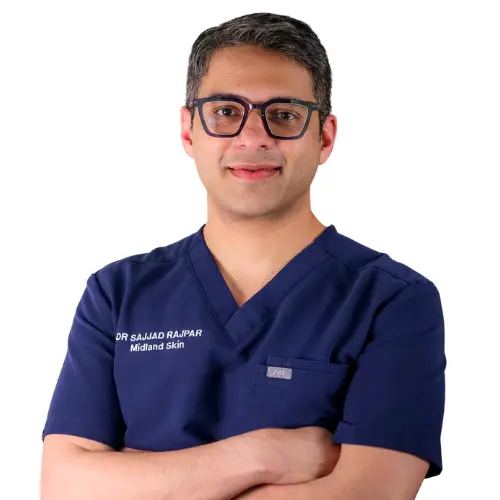
This page has been written and/or medically reviewed by Dr Sajjad Rajpar, Consultant Dermatologist and Medical Director of Midland Skin, Birmingham.
Dr Rajpar is on the GMC Specialist Register in Dermatology and has over 20 years’ experience in clinical dermatology. He provides clinical oversight to ensure the information on this page is accurate, balanced and consistent with current dermatology practice.
Dr Sajjad Rajpar
Date last updated: 24th Sep 2026
Book in with us
Expert, consultant led care in dermatology, skin surgery, eyelid surgery, lasers and aesthetics.
Disclaimer
The content on this website is provided for general information only. It is not, and must not be treated as, medical advice, a diagnosis, or a recommendation for any particular treatment. We make reasonable efforts to keep information accurate and up to date, but medicine and technology change, and content may not reflect the most current evidence, guidance, product information, or individual practice. You should not rely on this website to make decisions about your health or treatment. Always seek personalised advice from an appropriately qualified healthcare professional. Any examples, images, testimonials, and outcome descriptions are illustrative only. Results vary between individuals and no outcome can be guaranteed.

