
Children’s (paediatric) dermatology
Specialist assessment and treatment for skin problems in children
At Midland Skin we offer paediatric dermatology appointments with a consultant dermatologist for children in Birmingham, Solihull, Coventry, Wolverhampton, Worcester and across the Midlands.

Quick Facts about children’s dermatology

Best for
Skin problems in children
Appointment
Initial children’s dermatology assessment
Treatment
Skincare, creams or tablets

Symptoms
Rashes, spots, itch, hair loss
Provider
Consultant dermatologist

Price
See below
What is paediatric dermatology?
Paediatric dermatology is the assessment and treatment of skin, hair and nail conditions in children and teenagers. We see children of all ages, from babies to teenagers.
Children’s skin behaves differently from adult skin. The same condition can look different at different ages, several childhood rashes look alike, and treatments that are appropriate for adults are not always suitable for a young child. Strength, quantity, application site and duration of treatment all need to be judged for a child’s age and weight.
A specialist appointment gives you time to have the problem properly assessed, a clear explanation of what it is, and a written plan you can actually follow at home.
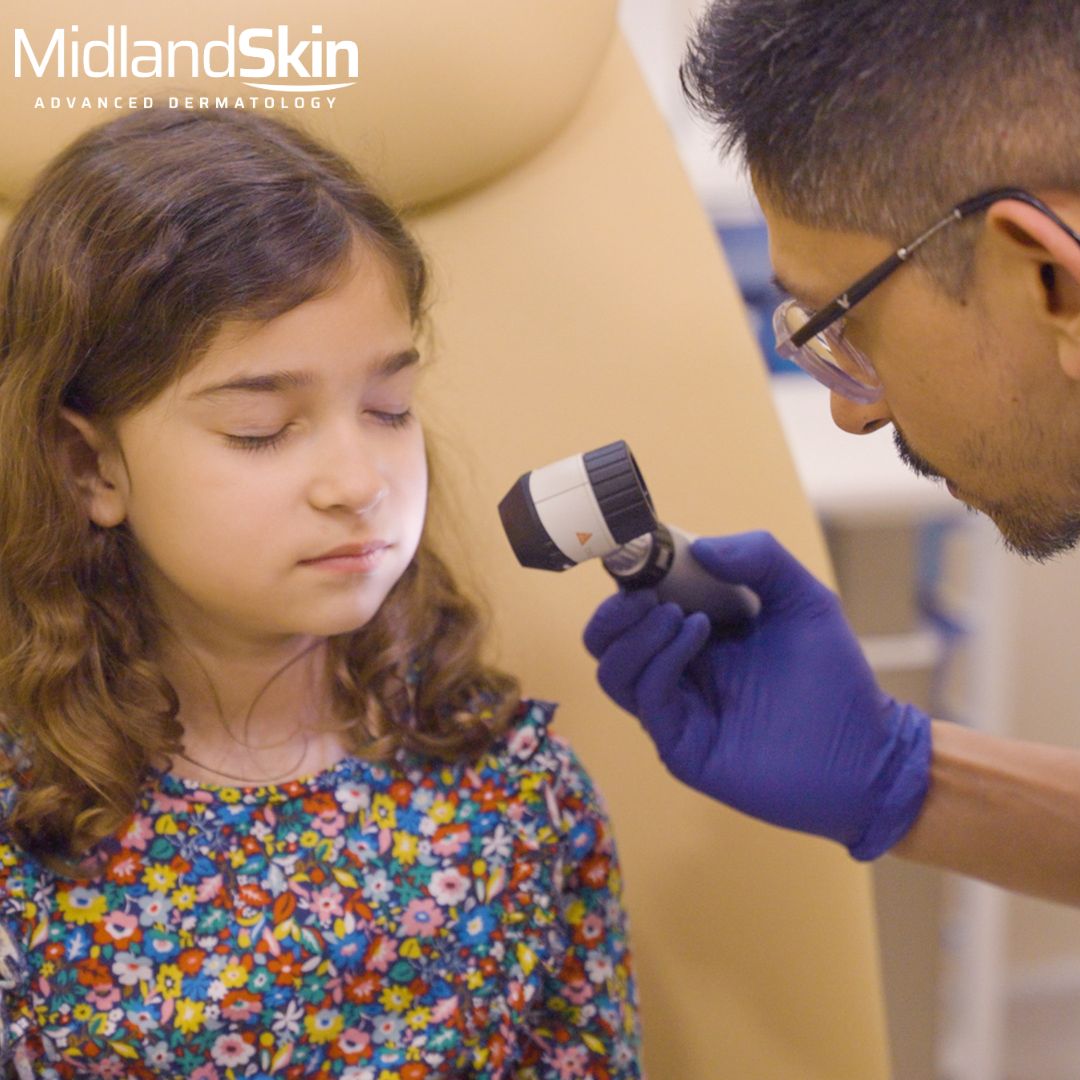
When is a dermatology assessment worthwhile for my child?
If a skin problem is persistent, keeps coming back, or has not settled with what you have already tried, a specialist assessment can establish what you are dealing with and how best to treat it.
An appointment is often particularly useful when:
- The diagnosis is unclear – the rash has been given different explanations, or nobody has been certain
- Treatment has not worked – creams from the pharmacy or GP have not helped, or help only briefly
- The problem keeps returning – flares settle and then come straight back
- It is affecting daily life – disturbed sleep, itching, discomfort, school or activities
- Your child is self-conscious about it – particularly spots, hair loss or visible rashes in older children and teenagers
- A mole or lesion is changing – new, growing or altering in appearance
- You want a clear long-term plan – rather than repeated short courses of treatment
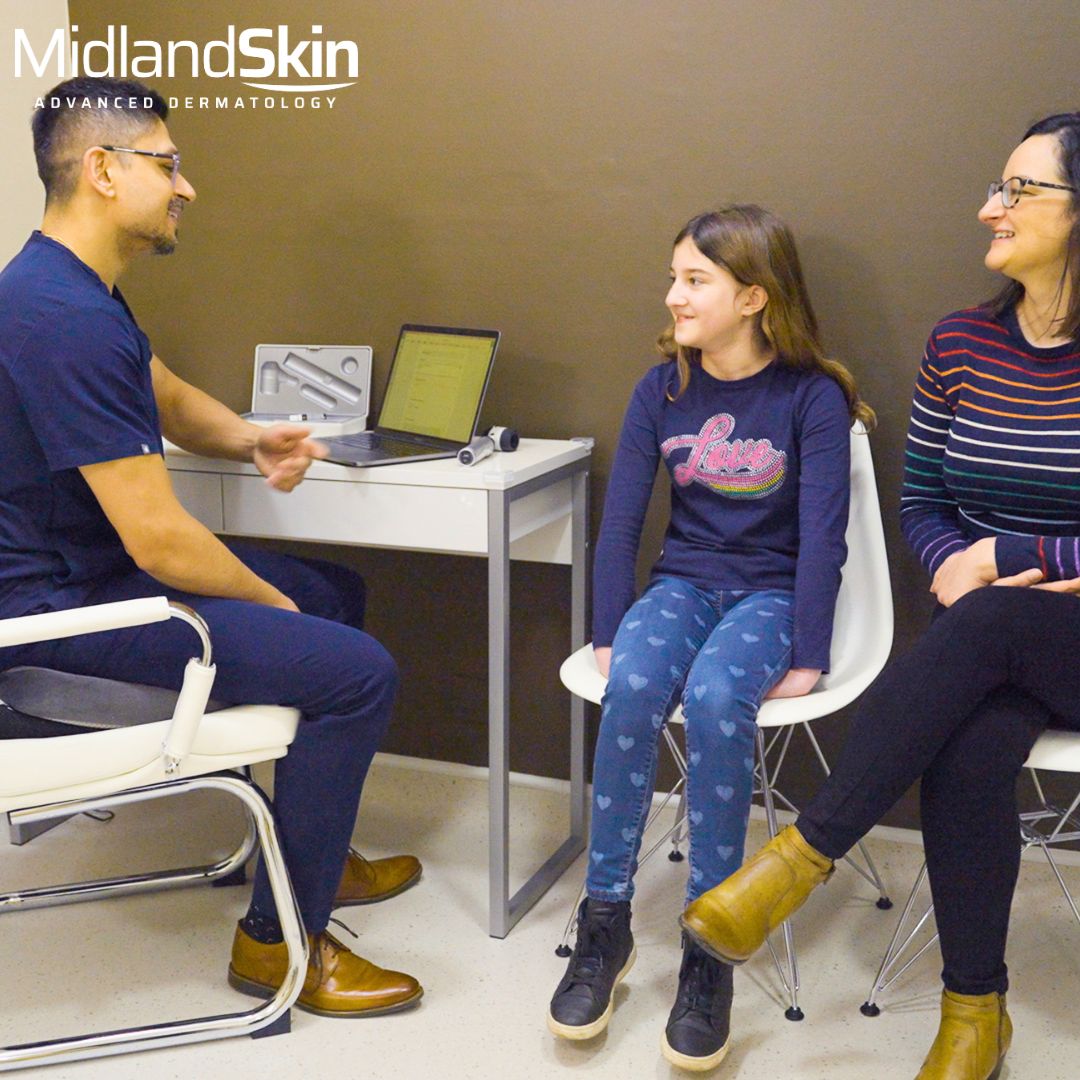
Skin problems we commonly see in children
- Eczema and dry, itchy skin
- Acne
- Warts and verrucas
- Molluscum contagiosum
- Fungal infections of the skin, scalp or nails
- Hair loss, including alopecia areata
- Cradle cap and seborrhoeic dermatitis
- Nappy rash and persistent nappy-area rashes
- Urticaria (hives)
- Birthmarks, moles and mole checks
- Psoriasis
- Vitiligo and other pigmentation changes
This is not a complete list. If you are unsure whether your child’s problem is something we can help with, our team can advise before you book.

Nicole Pereira

Treatment pathway
Initial children’s dermatology assessment
Your child is seen by a consultant dermatologist, who examines the skin and reviews the history of the problem, previous treatments, other medical conditions and any relevant family history. A parent or guardian attends throughout.
Care plan
The likely diagnosis and a treatment plan are discussed with you and, where appropriate, with your child.
Review consultation
A review consultation is required to assess how your child has responded and to decide whether treatment should be continued, changed or stopped. Longer-term management is discussed where relevant.
What treatment may involve
Treatment depends on what is found at the assessment, so no particular medication can be promised in advance.
Where treatment is appropriate, it may include:
Skincare and general measures
For many childhood skin conditions this is the foundation of treatment rather than an afterthought. Emollients, washing routines, bathing advice and avoiding irritants often make more difference than any single prescription.
Prescription creams and ointments
Topical treatments are the mainstay for most children. Your dermatologist will explain which product to use, how much, where, how often and for how long – including how to use topical steroids safely, which is one of the most common sources of confusion for parents.
Oral medication
Tablets or liquid medicines may be considered for some conditions, such as certain infections, more severe acne or widespread inflammation, where topical treatment alone is not enough.
Minor procedures and laser treatments
Selected minor procedures are offered to children over 11 years old on a case-by-case basis, taking into account the site, the diagnosis, and whether your child would tolerate the procedure comfortably. Children of any age can be assessed and treated; the age threshold applies only to minor procedures.
Referral where appropriate
If your child needs care that is better provided elsewhere – for example specialist paediatric services, allergy testing or inpatient care – we will say so and explain the most appropriate route.
What to expect afterwards
Many childhood skin conditions improve well with treatment, and some settle completely. Others – eczema and psoriasis in particular – are conditions that tend to come and go, where the aim is good long-term control rather than a permanent cure.
Improvement is often gradual rather than immediate, and the first plan is not always the final one. That is the purpose of the review consultation: to check what has actually happened, adjust the plan, and make sure you are not left repeating a treatment that is not working.
Your child’s appointment: FAQs
Who will see my child?
Your child will be seen by a consultant dermatologist on the GMC Specialist Register with experience in children’s skin conditions.
Our paediatric dermatologists are:
What age children do you see?
We see children of all ages, from babies through to teenagers. A parent or legal guardian attends the appointment.
Will my child be prescribed treatment at the first appointment?
Usually a treatment plan is discussed and started at the first appointment, but this depends on the assessment. Where the diagnosis needs confirming first, we will explain what needs to happen before treatment begins.
Should I stop creams before the appointment?
No. Please continue your child’s usual treatment unless you have been told otherwise, so the dermatologist can see how the skin looks on current treatment. It is very helpful to bring the actual products – or photographs of the packaging – rather than trying to remember the names.
What else is useful to bring?
Photographs of the rash at its worst are extremely useful, as skin conditions often improve or flare between appointments. Also bring details of treatments already tried, any other medication your child takes, and any known allergies.
Will my child need tests?
Most childhood skin conditions are diagnosed by examining the skin and taking a history. Where the appearance is unusual or the diagnosis is uncertain, a swab, a skin scraping, a blood test or occasionally a small biopsy may be considered.
Why is a review consultation required?
Because children’s skin conditions change, and the response to treatment is the most useful information we have. The review lets your dermatologist confirm the plan is working, adjust it if not, and agree what happens next.
Why choose Midland Skin
Childhood skin conditions are frequently mistaken for one another, and treatment that suits one diagnosis can make another worse. Your child is assessed by a consultant dermatologist with experience in children’s skin, so the diagnosis is reconsidered properly rather than assumed.
Appointments are unhurried, so there is time to explain the condition to you and to your child, demonstrate how treatments should actually be applied, and answer the practical questions that determine whether a plan works at home. The structured review means treatment is checked rather than simply repeated, and the diagnosis can be revisited if your child does not respond as expected.
Book in with us
Ready to get started? Book a consultation with our team at Midland Skin. Friendly, expert advice tailored to you.
Fees
Children's dermatology Show pricing
Book ConsultationChildren's initial dermatology assessment (0-11y)
Up to 35 minutes
Children's dermatology assessment (12-18y)
Book the adult assessment for the concern, for example an Initial Acne Assessment.
Children's review dermatology consultation (0-11y)
Up to 25 minutes
Review consultation
Standard, up to 20 minutes
Rebecca Evenson
About the Author
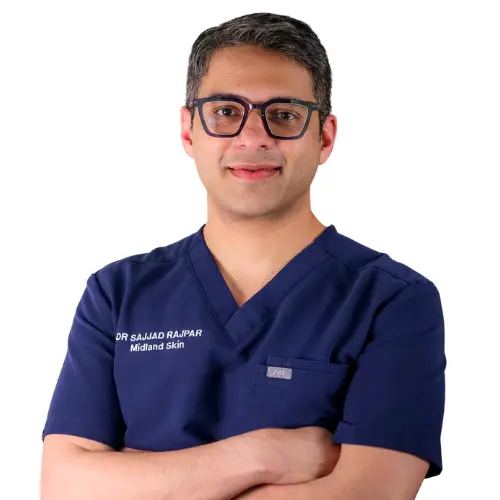
This page has been written and/or medically reviewed by Dr Sajjad Rajpar, Consultant Dermatologist and Medical Director of Midland Skin, Birmingham.
Dr Rajpar is on the GMC Specialist Register in Dermatology and has over 20 years’ experience in clinical dermatology. He provides clinical oversight to ensure the information on this page is accurate, balanced and consistent with current dermatology practice.
Dr Sajjad Rajpar
Date last updated: 26th Sep 2026
Book in with us
Expert, consultant led care in dermatology, skin surgery, eyelid surgery, lasers and aesthetics.
Disclaimer
The content on this website is provided for general information only. It is not, and must not be treated as, medical advice, a diagnosis, or a recommendation for any particular treatment. We make reasonable efforts to keep information accurate and up to date, but medicine and technology change, and content may not reflect the most current evidence, guidance, product information, or individual practice. You should not rely on this website to make decisions about your health or treatment. Always seek personalised advice from an appropriately qualified healthcare professional. Any examples, images, testimonials, and outcome descriptions are illustrative only. Results vary between individuals and no outcome can be guaranteed.

